This summer’s 2026 FIFA World Cup isn’t just a sports event; it’s a continent-wide, multi-week operational coordination test comprising 48 teams and 104 matches, and spanning 16 host cities across three countries over 39 days.



















There will be continuous peak demand, and congestion will roll across the continent before converging for the final in New Jersey’s MetLife Stadium on 19 July. Slot-controlled airports will be heavily restricted, parking may be limited, and then there are three regulatory systems to contend with.
Private aviation faces a challenge to one of its biggest advantages, flexibility, as air traffic management will be rigid. And the huge distances involved will drive demand for long-range jets but some airports, Teterboro for example, have weight restrictions.
Countdown to kick off
The past year has been spent planning, with efforts ramping up significantly over the last two to six months pre-event.
“The scale, multi-city nature, special event fees and intense peak demand make it one of the most complex planning cycles,” says Germany-based FAI rent-a-jet managing director Georg Gruber. “During the months of June and July our staff face a holiday restriction.”
“This isn't just a busy period; it's a fundamental shift in how global aviation infrastructure operates,” adds Hera Flight COO Jonathan Hollar, who has been talking to clients about how they think they'll move: “Because the best solutions come from anticipating demand, not chasing it.” The company scales both internally and across its partner network; more people, more coverage, fewer single points of failure. On the ground that means tighter dispatch coordination, eyes on airport congestion in real time and handling agreements at host cities that are already worked out before things get hectic. Scheduling becomes more fluid too, because match results have a way of changing everyone’s plans overnight.
Immediate priorities at Hunt & Palmer are assessing airport infrastructure, transport links, operating hours and aircraft availability. “Our strong presence in the US, combined with global buying power and local knowledge, gives us confidence in the solutions we provide for major tournaments,” says head of sales and marketing Simon Cooper.
The combination of global reach and local expertise is critical. “During high-demand events, it is not just about sourcing aircraft, it is about understanding how each airport system will operate under pressure and being able to respond in real time,” adds Gama Aviation deputy MD, aircraft management and charter Philipp Schuster.
At Wings Air Helicopters in the US, the focus early on was securing access to event venues, nearby airports and heliports for charter flights, and positioning aircraft strategically to handle real-time changes during matches. It will handle the surge in traffic by expanding customer service hours and adding additional reps to field inquiries, especially since most charters are booked on short notice.
As soon as Business Jet found out that its home base Dallas was host to nine matches, including a semifinal, it began considering the impacts to, and opportunities for, its flight operations. “With most of our managed aircraft based at Dallas Love Field, all of our operational discussions and priorities revolve around two primary questions,” says CEO Chris Wright. “How can we minimise the impact and set proper expectations for our non-World Cup travellers, and how can we capture additional charter hours with the anticipated demand?”
Understanding airport event fees, operational restrictions and early-and-often communication to customers has especially been important over the last few months.
Fleet availability is a key focus, so the company will be scheduling maintenance down time and pilot training around the event. It is considering positioning AOG mechanics in the key markets its aircraft will be frequenting and hopes to sell repositioning legs between host cities: “Timely marketing on the various booking and social media platforms and attractive pricing will be the key to success here,” Wright adds. “Here in the US we sometimes forget just how huge this sport is on the world stage. In Dallas, we’re anticipating a Super Bowl’s worth of GA traffic for each match. That’s like hosting nine Super Bowls in 30 days.”
AirShare looks at every trip request in a vacuum to maintain impartiality during planning. It always encourages travellers to large events to plan on staying at least one night to prevent duty issues, but for those unable to do so, it communicates all potential hurdles well in advance of the final booking so there are no surprises on travel day. “Without proper planning, uncontrollable issues can cause crew duty issues and could impact travel time,” says head of charter sales Chase Martin. “Adding a hotel night for your party helps to mitigate these almost completely, but if a client requires us to pre-position additional crew members or have a second aircraft ready for the back half of their day we work through those on a case-by-case basis.”
Maverick Helicopters can scale quickly, deploying additional helicopters and operational resources from its Las Vegas base. While some bookings fall within the standard seven-day window, it will add pilots and resources each day to support last-minute demand and short-notice requests. “We’re coming off an exceptionally strong first quarter for helicopter charter demand in 2026, and momentum continues to build,” says VP marketing Bryan Kroten.
Alan Walsh, president of jet card provider Sentient Jet, expects the landscape will constantly evolve, with booking demand shifting on a daily basis. During the group games he expects more structured travel patterns, but as the tournament moves into the elimination round, travel will become much more fluid depending on where teams are playing. His clients are experienced travellers: “Where we really partner with them is in helping identify the optimal times to arrive and depart. No one, regardless of how they are travelling, wants to deal with unnecessary delays or uncertainty.”
Managing a fleet of private jets and coordinating a large VIP airliner movement are different disciplines; one is about agility, the other about precision, and both have to work perfectly at the same time. On the private jet side, it’s about anticipating demand and pressure points. For large VIP airliners, the timeline is longer and more structured. “Those trips require early commitments around routing, airport compatibility, ground handling and security,” says Richard Ziskind, chief of staff to the board of directors at Alerion Aviation. “But the priority across both is the same: remove as much uncertainty as possible before the event starts.”
Team support
Crew planning can catch operators out, so Hera Flight starts structuring rotations early. Staying compliant with duty regulations while keeping service consistent across a prolonged high-pressure event takes real forethought. During peak periods it brings in additional crew and leans on a network of vetted operators to scale capacity.
Taking care of the core crew is paramount notes VIH Aviation Group director of business development Dave Des Roches, and that means keeping them properly fed and watered, with “a black out period for vacations so everyone is on hand and supported.” As a secondary market for the FIFA tournament, he expects traffic to its British Columbia-based FBO YYJ FBO Services to be a result of spill over from Vancouver if they run out of capacity. The company is working with the airport authority in order to have contingency plan options until those are exhausted.
ABS Jets will manage each flight as a small project and will reinforce OCC staffing, extend duty coverage and strengthen pre-coordination with handling agents and airports. “We heavily rely on experience gained from previous large-scale events, such as the recent Olympic Games in Italy, which significantly refined our planning, decision-making and last‑minute response capabilities,” says marketing manager Petr Wessnitzer.
The challenge isn’t the flying
It’s thunderstorm season in parts of the US in June, but that’s not the only challenge. Most people don’t understand the extremely tight constraints, notes FAI’s Gruber: “Even small disruptions can have a significant ripple effect. It becomes a real-time logistics exercise where flexibility and planning have to work hand in hand.”
Delivering reliably at scale requires not only coordination and planning but very close commercial monitoring and client accompaniment. Availability tightens quickly and pricing can evolve significantly as demand peaks. “Strategic positioning in key hubs between match days will be essential to minimise empty legs and maximise responsiveness,” notes Hi Fly CCO Nuno Tavares Rodrigues. “And early engagement and proactive planning can make a significant difference in both availability and pricing.”
Des Roches expects great things from the variety of aircraft and mix of people who will be having their first experience in this market: “An event like this draws more than any other, and with that will be an abundance of newcomers who we can impress with our operations and quality of staff.”
Slot access and ramp capacity will define what is possible operationally, particularly around key fixtures, “but cost volatility, especially with fuel, introduces an additional layer of uncertainty that both operators and clients need to navigate,” says Gama Aviation MD, aircraft management and charter, Graham Williamson. “Fuel volatility and infrastructure constraints are the two variables that will shape how the market behaves as we move closer to the tournament.”
Incurring fees
With all this busyness, the thorny issue of special event fees raises its head. Mitchell Davies, CM, director of aviation at Sugar Land Regional Airport in Texas notes that its (very low) increase helps pay for additional costs incurred by the increase in traffic, such as renting additional tugs and golf carts, high end portable restrooms and additional refrigerator space for the increase in catering. It also covers the cost incurred to add concrete for additional ground equipment staging and for paying large amounts of overtime because hiring temporary help for skilled labour for just a few weeks is not practical. The airport also plans to spend a lot of money feeding staff, volunteers and crews/passengers. “The airport is investing in the experience, and that has some cost,” he explains.
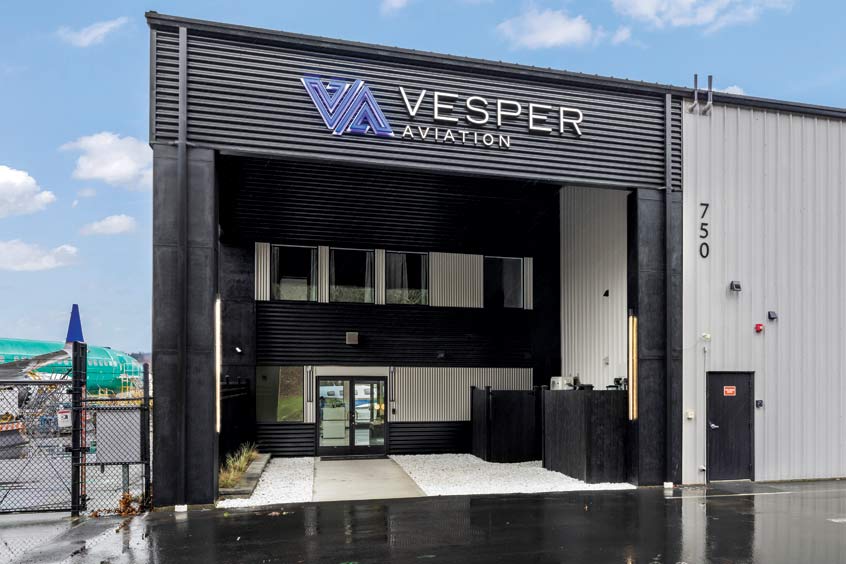
Traffic at Vesper Aviation, a Renton Municipal Airport-based FBO in Seattle, is projected to exceed three times its typical annual volume; during the last World Cup demand surged to over 100 aircraft movements within a single week at its Fort Worth Spinks location in Texas. The company anticipates similar, if not greater, activity and has secured additional ramp space across the field to accommodate increased traffic.
While it does not usually charge event fees for smaller events, the World Cup necessitates a different approach, reflecting the operational demands of a month-long, high-volume event. The team will be on call 24/7, and its equipment and infrastructure will be utilised at full capacity throughout. The additional staffing requirements and continuous use of resources make it necessary to implement these fees.
“After benchmarking our pricing against nearby airports, we found that our rates remain competitive, particularly for charter operators, where our fees are still below the local average,” says general manager Gabriella Calabrese.
Tri-nation complexity
Signature Aviation handles international traffic across its network every day, so the process itself isn’t new. “What changes is the volume,” says VP of safety and security Hector Chahin. Its real advantage is its network. There’s strong overlap between host cities across the US and Canada and Signature locations; in markets like New York, Miami and Houston it operates across multiple FBOs, sometimes as many as four or five, which gives guests more flexibility and allows it to spread demand across the network.
“We’re investing across the board, in technology, facility upgrades, equipment and our people,” he adds. Teams are trained and ready to handle higher volumes in the terminal and on the ramp, with additional planning underway across security, guest services and operations. The company continues to invest in enhanced camera systems and more advance monitoring, and is using a mix of self-service tools, AI and integrated platforms to manage higher volumes and keep communication flowing. A key piece of that is Signature Vision, which gives operators and crews a more direct, real-time view into their reservations and activity across the network.
To manage the concentrated surges before and after each game in Houston, Sugar Land Regional Airport will implement traffic management measures during the seven matches there: mandatory parking reservations and Prior Permission Required coordination for all arrivals/departures, which effectively creates a managed slot environment even though it is not a slot-controlled airport in the traditional sense.
Operationally, the biggest adjustment will be increased CBP staffing during Houston match periods to accommodate higher international demand. “A large portion of our existing international traffic originates from Mexico, so our primary focus is ensuring no delays in inspection processing and efficient handling during peak arrival times,” notes Davies.
The airport has made targeted investments in air traffic control technology and communications infrastructure to support increased operational tempo. Mobile Pre-Departure Clearance (PDC), an FAA-supported programme, allows pilots to receive IFR clearances via text or email, reducing radio congestion and improving efficiency.
Banyan Air Service expects high demand in Miami for the Brazil v Scotland match on 24 June, as well as the 27 June match between Portugal and Columbia. The Fort Lauderdale Executive Airport is the busiest on the eastern seaboard of the US so the customs team already works at a high level. COO Jon Tonko notes: “Banyan is already a high volume FBO so we will use the systems and processes already in place to meet the demands of our guests.”
ICCS Mexico & Latin America expects traffic increases of up to 50% in key markets, with demand highly concentrated the host cities of Mexico City, Monterrey and Guadalajara. Business aviation operations are not permitted at Mexico City International Airport, positioning Toluca as the primary gateway for traffic serving the capital and a critical hub during the tournament. ICCS has already inaugurated a flagship FBO at Toluca International Airport, built for heavy operations, and has made enhancements to its Monterrey facilities while preparing for supporting operations at Saltillo.
“We will be operating under an FBO slots programme, and we expect a surge in both international and domestic traffic, which will be compounded by overnight restrictions at various airports,” says COO Miguel Ballesteros.
Fuel delays are also expected to occur across these hubs, and this challenging environment reinforces the critical importance of utilising alternate airports and relying on experienced trip support coordination to maintain operational efficiency.
Having reviewed parking, stand allocation and equipment requirements, Manny FBO has invested in passenger stairs and towbarless tractors at the key host stations, and has equipped and improved its CCO offices with more screens to monitor flight routes, aircraft and movements.
It expects the authorities to implement random inspections on the ramp, as they do during busy times such as Thanksgiving or Christmas. “These inspections do not take too much time as long as operators have all their documents in order,” says senior operations manager Emilio Padilla. “Apart from that, everything will work as usual.”
Consorcio Aviation is bracing for a systemic demand shock. Director of commercial and operations Andres Sotomayor notes: “The core challenge isn’t just volume; it’s simultaneity. Everyone wants the same arrival slots. Slot coordination is currently incredibly tight. If operators are only starting to look at slots now, they are navigating remainders.”
For clients flying heavy jets from South America, the primary hurdle is the initial entry into the North American ‘bubble’. Consorcio recognised the complexity early and initiated the clearing process for client aircraft back in December 2025. It is currently in the thick of navigating the intensive permitting, routing and US clearance paperwork required to establish authority for these flights.
Customs and immigration (CBP) will be the primary bottleneck of this tournament. During high-security, high-profile events, standard procedures slow down significantly and minor paperwork discrepancies result in major ground delays.
Primary international gateways in host cities will hit their limits rapidly, specifically regarding overnight parking, FBO lounge capacity and ground service equipment availability.
Ultra long-haul operators flying in from South America also have to factor in tech stops for fuel. Those who will perform best over the next two months are the ones with ironclad secondary and tertiary airport strategies. “If you are only looking at primary hubs, you have already surrendered your operational optionality,” he says.
Generally, operators should expect heightened security measures such as potential Temporary Flight Restrictions (TFRs), increased screening and coordination requirements, and possible limitations on last-minute changes. This will likely extend turnaround times so compliance and early coordination will be key to maintaining efficiency.
Slot coordination will be highly structured and critical, and with FAA-issued PPR requirements in place, strict adherence to assigned times will be necessary.
Gill Aviation FBO at David Wayne Hooks Airport in Texas has enhanced PPR and reservation management processes, increased staffing and operational readiness across departments, and expanded its customer communication protocols for real-time updates. “We are leveraging existing scheduling tools, direct communication channels and coordinated planning with airport operations and ATC to manage flow,” says marketing manager Emma Dildy. “Technology will play a key role in reducing friction, but ultimately, clear communication and disciplined scheduling will be the biggest drivers of success.”
Vesper Aviation has purchased a 3,000-gallon Jet-A refuelling truck, an aircraft tug for faster ground handling and has integrated advanced scheduling and billing software to reduce wait times and improve service flow.
It is also expanding the line service team and implementing extended operational coverage to maintain efficiency during peak periods, while the airport itself is implementing upgraded security measures, including new gate systems and over 100 cameras.
The Seattle-based company has a record of proven performance under pressure, and Calabrese notes: “During the Boeing Field closures, our team successfully operated near 24/7 for six consecutive months, supporting air medical flights and overflow traffic with efficiency and reliability. That same ‘all hands on deck’ approach will be in place throughout the World Cup period.”
Abbotsford Airport in Canada is well positioned to handle an influx of itinerant aircraft; it does not operate under slot restrictions, has 24/7 customs availability and offers a fully equipped private terminal. Airport-based FBO Fast Air has prepared for increased staffing support, allocated additional ramp space and coordinated closely with the main terminal to access additional equipment as needed. It has also increased transportation capacity by adding shuttle vehicles, enhancing connectivity into Vancouver.
As tournament schedules evolve and teams advance, last-minute travel requirements are inevitable. “This is where Abbotsford becomes particularly valuable,” says Fast Air marketing manager Karlen Wrublowsky. “Our flexibility allows us to accommodate movements when primary airports are constrained. Additionally, US-based operators will often only have a short window, sometimes as little as three days, to secure slots at major airports, which will naturally drive more last-minute activity.”
She is excited by the opportunity to showcase the role that regional airports can play in supporting a major global event; it highlights the importance of a broader aviation network beyond primary hubs.
At the same time, there is concern that operators and travellers have underestimated how early to plan, particularly if they are intent on using primary airports.
“The biggest mistake an operator can make right now is treating this like a standard busy season,” says Sotomayor. Furthermore, operators must account for the macro environment; heavily increased aviation fuel costs driven by ongoing geopolitical tensions and global supply chain shifts. For operators flying long-haul from South America, these volatile fuel prices fundamentally alter trip economics and route planning. Those who lack experienced regional partners, don’t have backup parking secured or haven’t accounted for fuel and routing contingencies, will feel the pain, he notes, both operationally and commercially.