Typical missions for the Innsbruck‑based Praetor 600 will include medium and long‑range charters within Europe, as well as flights between Europe and the Middle East or North Africa.
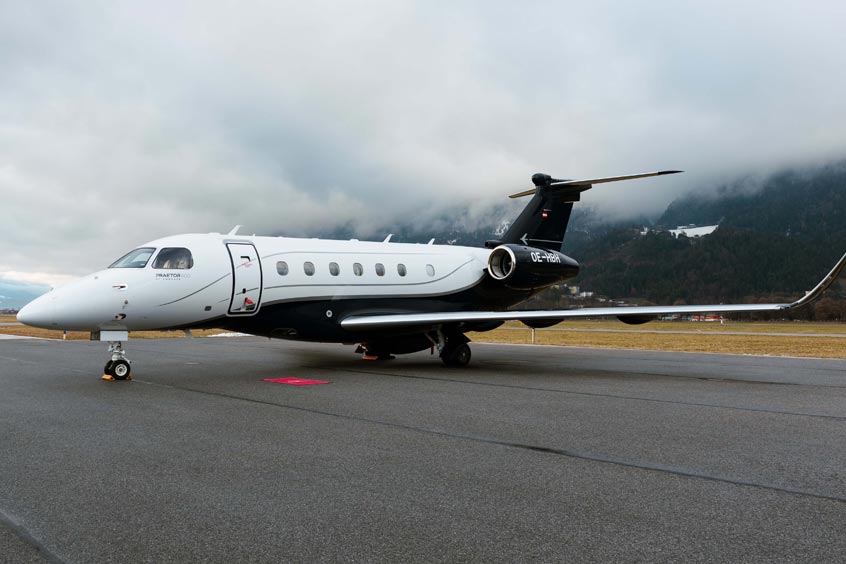
Sparfell has added an Embraer Praetor 600 to its fleet, delivered in early 2025. Operated under the firm’s Austrian AOC, the aircraft is based in Innsbruck and is fully available for ad hoc charter. It is Sparfell’s second Praetor 600, joining the first aircraft positioned in Paris, which gives the team strong coverage of both Western and Central Europe.
“The Praetor 600 fits our strategy very precisely,” reveals group marketing manager Adrien Fostoff. “It is a super midsize jet with intercontinental range of around 4,000nm and excellent short‑field performance. This combination lets us offer nonstop missions between key European, Middle Eastern and North African cities while still accessing airports such as Innsbruck that are close to our clients’ final destinations.
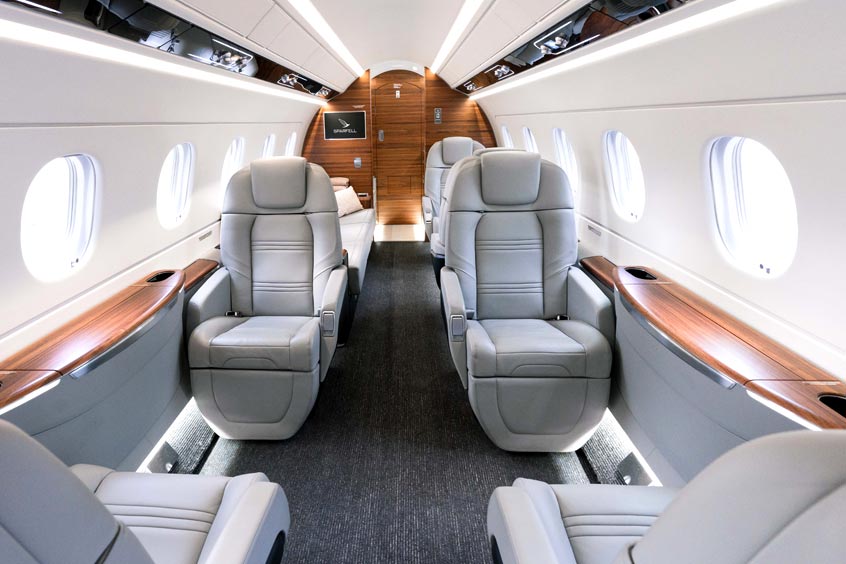
“For our customers, the Praetor 600 offers one of the most comfortable and capable cabins in its class, seating nine passengers in executive comfort.”
Operationally, the aircraft strengthens and complements Sparfell’s existing fleet of more than 30 aircraft across four AOCs. It bridges the gap between its light and midsize jets and large‑cabin, long‑range aircraft. This gives sales teams more flexibility to propose the right platform for each mission profile. With two Praetor 600s now based in Paris and Innsbruck, it can respond faster to charter requests, optimise positioning flights and support both leisure and corporate traffic throughout the year, including the busy winter season.
Typical missions for the Innsbruck‑based Praetor 600 will include medium- and long‑range charters within Europe, as well as flights between Europe and the Middle East or north Africa.
Fostoff adds: “In the months ahead, our ambition is to continue expanding our managed and charter fleet in the segments where we see sustained demand, while maintaining the high level of service and personalisation that our clients expect. We also remain focused on operating efficiency and on working with our partners to support more responsible, lower‑impact private aviation solutions.”
In other news, Sparfell is supporting the Spirit of Douglas project, an iconic DC-3 engaged in a round-the-world tour.
The Spirit of Douglas team was looking for a strong, reputable and highly experienced partner in flight operations, able to support a tour of this scale and complexity. This partnership comes at a meaningful moment for Sparfell, as this year marks 75 years of Queffelec family aviation heritage, a legacy that began in the early 1950s and continues today within the group.
Fostoff explains: “The connection with Douglas history made the collaboration an obvious fit. Within the Queffelec family, Douglas aircraft are part of that story: the chairman’s father was a pioneer with 5,700 hours on the DC-3, and the chairman, Philip G. Queffelec, has long been connected to the Douglas legacy through his career as a McDonnell Douglas representative. In that context, supporting the Spirit of Douglas was a natural decision and an opportunity to stand behind a project that is both technically demanding and deeply human.”
Operationally, Sparfell is supporting the aircraft’s air operations throughout the World Cruiser Tour, ensuring the consistency and reliability required to move a historic aircraft safely from one destination to the next. The aircraft first flew in 1942 as a Douglas C-53 and was later converted into a VIP DC-3, including the addition of an AiResearch Maximizer speed kit in 1955. The World Cruiser Tour is presented by the project as a global odyssey designed to retrace the great air routes of aviation history across countries, continents and oceans.
During this stop, the aircraft’s presence in Geneva was made possible through Sparfell’s operational organisation. Ahead of the continuation of the world tour, the Spirit of Douglas visited Geneva and completed a local flight over Lake Geneva with Sparfell colleagues on board, including the chairman. It was a particularly emotional moment for him, echoing the spirit of the project itself: keeping aviation heritage alive and passing it on.