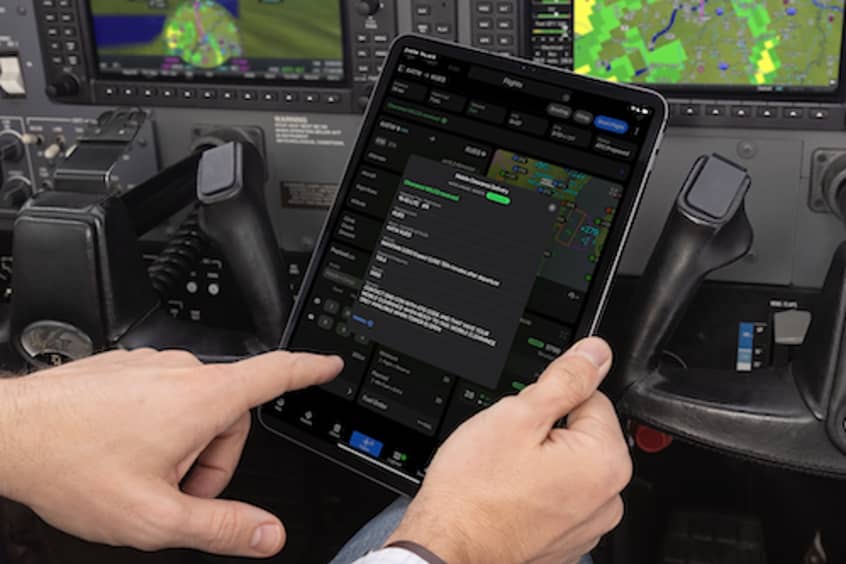
The eIPP is a first-of-its-kind initiative outlined in President Trump's Unleashing Drone Dominance Executive Order. It creates one of the nation's largest real-world testing environments for next-generation aircraft.
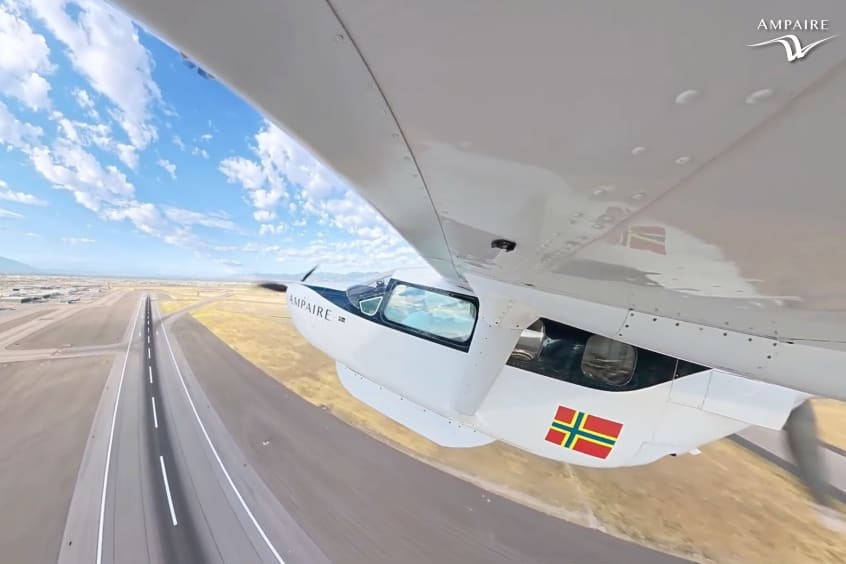
Ampaire and the Utah Department of Transportation have conducted a hybrid-electric demonstration flight along Utah's I-15 corridor to test future cargo service.
The flight took place between Salt Lake City International airport and Cedar City Regional airport. It marks the second major step in the US Department of Transportation's work to safely integrate advanced air mobility aircraft into the national airspace system under the FAA eVTOL Integration Pilot Programme (eIPP).
“We're excited to support the Utah Department of Transportation and Ampaire under the eIPP,” says FAA deputy administrator Chris Rocheleau. “This demonstration will provide valuable operational experience and help us understand how to safely integrate advanced air mobility into the national airspace system.”
“Our responsibility is to prepare Utah's transportation system for the future, and today's demonstration shows this future is already taking flight,” UDOT commissioner Carlos Braceras shares. “Through the uFLY initiative, Utah is bringing together industry, government and research partners to collect data so the FAA may safely evaluate emerging aviation technologies that have the potential to strengthen regional connectivity, expand economic opportunity and improve mobility for communities across our state and the nation.”
The eIPP is a first-of-its-kind initiative outlined in President Trump's Unleashing Drone Dominance Executive Order. It creates one of the nation's largest real-world testing environments for next-generation aircraft with the potential to create jobs, connect communities and strengthen American leadership in aviation.
In March 2026, the Department of Transportation selected eight projects across 26 states to participate in the eIPP. The Utah Department of Transportation is one of the eight participants.
The FAA will use what it learns from these demonstrations to identify gaps, improve procedures and support the safe integration of advanced air mobility into the national airspace system.
The Utah Department of Transportation and other eIPP participants are planning additional test flights throughout the rest of the year.
“uFLY is about moving hybrid-electric aviation from demonstration into real-world operations. Our aircraft can fly meaningful regional routes across varied terrain using the airports and operating infrastructure already in place. The propulsion system changes; the regional aviation system does not have to,” explains Kevin Noertker, co-founder and CEO of Ampaire.
“As we launch uFLY, we're not simply demonstrating what's possible: we're building the foundation for the future of advanced air mobility in Utah. Through continued testing, collaboration and innovation, Utah is creating a model for how advanced air mobility can strengthen urban-rural connectivity, support economic opportunity and improve mobility for Utahns across our state,” adds Matt Maas, aeronautics director, Utah Department of Transportation.
“Over Utah's mountainous terrain and high-density-altitude conditions, the additional electric boost power helped us climb through conditions that would have been much more limiting in a conventional-engine-only configuration,” concludes Zack Kraus, Ampaire test pilot.
The EEL is Ampaire's hybrid-electric Cessna 337 Skymaster testbed, with electric propulsion driving the nose propeller and combustion propulsion driving the aft propeller. The configuration allows Ampaire to demonstrate meaningful reduction in fuel use while retaining the range and operational flexibility needed for regional aviation.
Ampaire and its uFLY partners plan to use the EEL for early operational learning and introduce the Eco Caravan in subsequent programme phases. The Eco Caravan is Ampaire's hybrid-electric upgrade for the Cessna Grand Caravan and the company's planned first commercial aircraft product. Its AMP-H570 hybrid-electric propulsion system is designed to self-charge in flight and integrate into existing aviation operations without dependence on ground charging.
This configuration allows Ampaire to realise the benefits of electric aviation, including significant reductions in fuel consumption, while retaining the range, flexibility and operational resilience of conventional aircraft.