Although a Challenger 650 is not new to the market, it plays a pivotal role in FTC’s recovery. Its arrival enabled the company to reactivate its AOC and re‑enter the commercial charter environment with a capable platform.

FTC Aviation has entered a new chapter in its operational history following the successful reinstatement of its AOC and its return to the San Marino CAA’s community of commercial air transport (CAT) operators. While the Challenger 650 now flying under FTC’s AOC has attracted attention, the real story is the company’s regulatory comeback after several exceptionally challenging years.
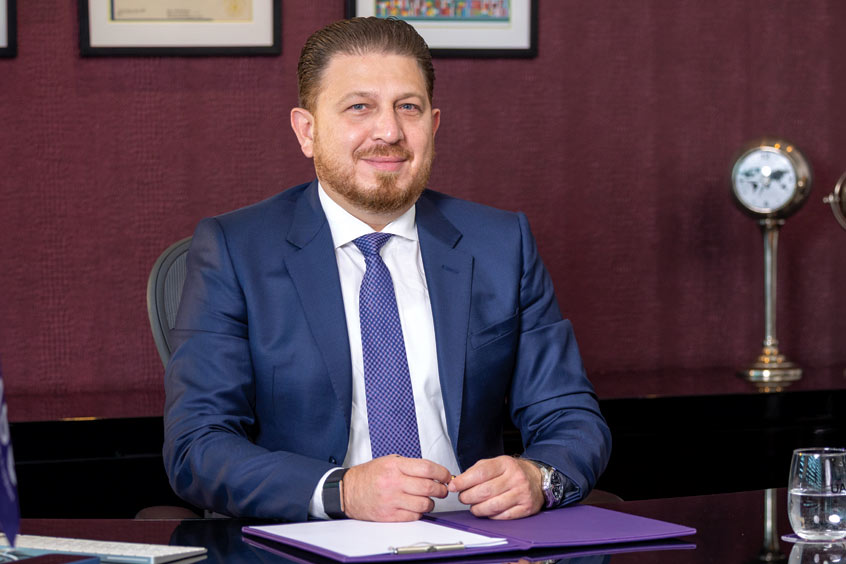
The AOC reinstatement followed a comprehensive base inspection and demonstration flight conducted between 11–13 December 2025. FTC moved quickly to address and close all findings, and the authority restored the certificate on 24 December 2025. “It was quite a Christmas gift,” says CEO and accountable manager Aleksandar Simic. “It also happened to be my birthday. Our designated inspectors, captain Paul Hutchinson for flight operations and Simon Fulbrook for airworthiness, supported us even during the holiday period. Their professionalism made a real difference.”
With the AOC back in place, FTC regained its EASA TCO approval, UK TCO approval and US authorisation for commercial flights. The company now hopes to operate charter flights to the US for the upcoming FIFA World Cup.
Although the Challenger 650 is not new to the market, it plays a pivotal role in FTC’s recovery. Its arrival enabled the company to reactivate its AOC and re‑enter the commercial charter environment with a modern, capable platform. “The aircraft itself is not the headline,” Simic notes. “The significance lies in what it represents: our operational reactivation and our return to the global CAT operator family.”
The journey to this point has been anything but simple. Before the Ukrainian crisis, FTC managed a fleet of 13 heavy jets, with a strong presence in the Russian and CIS markets. The geopolitical shockwaves that followed reshaped the entire regional aviation landscape. Although FTC was never designated as a sanctioned entity, it became subject to strict US and EU export‑control restrictions, ultimately forcing the termination of all management agreements.
“Only I truly know how much effort, energy and resilience it took to keep the company alive through two major crises: first COVID, and immediately after, the sanctions‑related collapse of our core market,” Simic reflects. “I know the saying that self‑praise is no recommendation, but in this case the facts speak for themselves. The journey is worth acknowledging.”
Today, FTC is rebuilding with a focus on compliance, operational excellence and long‑term stability. “This year has started positively,” says Simic. “Aircraft management and operations remain the core of our business. The Challenger 650 has given us a solid platform from which to rebuild, and our ambition is to expand our managed fleet again, carefully, sustainably and with the same commitment to quality that has always defined FTC.
“We owe sincere thanks to the San Marino Aircraft Registry and CAA, as well as the Aruba Registry and DCA. They stood by us during an extremely complex period. After more than 40 years in this industry, I know that trust with authorities is earned over decades, and their support, fairness and professionalism deserve special recognition.”